Spring ECU Tuning Guide for Audi and BMW Owners Preparing for Performance Driving Season
ECU tuning recalibrates your engine's software to sharpen throttle response, improve power delivery, and make the car more rewarding to drive. Spring is the right time to act. Performance driving season is here: canyon roads, mountain passes, and track events. Your engine should be ready for it.
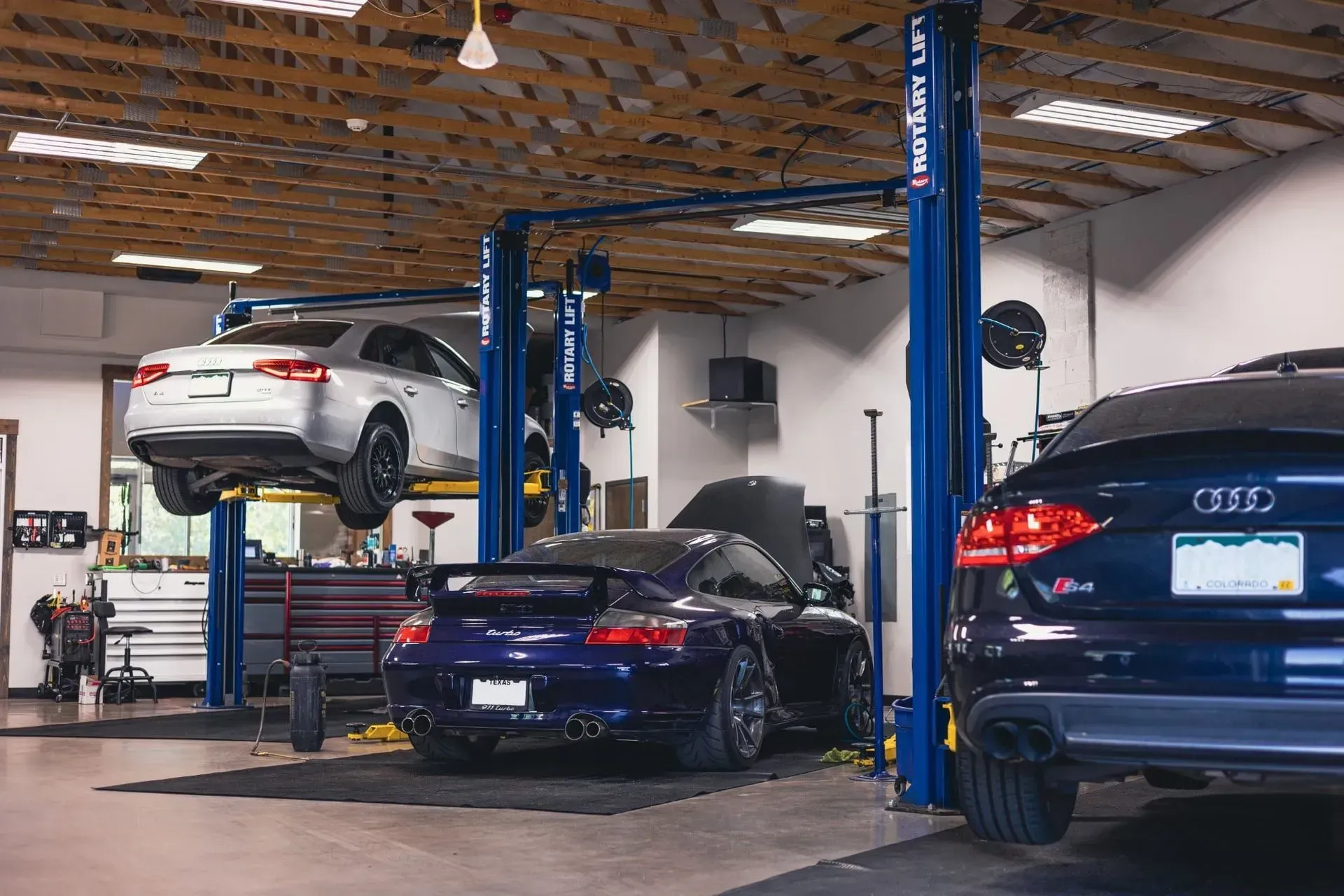
Black Canyon Performance European Auto Service aims to maximize your vehicle's durability and keep it running at peak performance. We run a diagnostics-first process before any calibration work begins, so your Audi or BMW is ready before we touch the tune.
What Is ECU Tuning and What Does It Actually Do?
The ECU (Engine Control Unit) manages the core functions of your engine: fuel delivery, ignition timing, boost pressure, and throttle response. Manufacturers set these values conservatively from the factory to cover varying fuel grades, different climates, and multiple regional emissions standards. That conservative baseline leaves real room to work with.
ECU tuning adjusts those parameters to match your actual driving conditions and goals. Fuel mapping, boost targets, and throttle response curves are refined to let the engine deliver what it was already capable of, more consistently and cleanly.
What Drivers Notice After a Tune
- Throttle response improves: pedal inputs feel direct rather than sluggish
- Power delivery smooths out: acceleration builds evenly through the rev range
- Mid-range torque increases: more pull available during everyday driving, not just at peak RPM
- Sharper shift behavior in vehicles with TCU (Transmission Control Unit) calibration applied alongside
Why Audi and BMW Engines Respond Well to Calibration
The BMW B58 and N55, along with Audi's EA888, used across its 2.0T quattro lineup, run management systems designed to accept refined calibration inputs. Their architecture was built with adaptability in mind, which is why these platforms produce clean, reliable results when the work is done correctly and preceded by proper diagnostics.
Why Spring Is the Right Time for Performance Tuning and Diagnostics
Winter calibration work is complicated by cold-start fuel enrichment, shifting air density, and more active traction systems. Together, these variables distort how a tune actually responds. Spring removes them. Stable temperatures, consistent fuel quality, and predictable conditions give calibration work a clean foundation.
It also marks the start of the season when performance driving happens. Colorado's canyon roads and mountain passes open back up. Getting calibration done now means your Audi or BMW is at its best when the roads are.
How Winter Conditions Affect Engine Behavior
In cold months, engines run richer fuel mixtures at startup, air density shifts more widely, and traction systems stay more active. These factors mask how the engine truly responds under load. A spring tune reflects how your car actually performs in the conditions you drive it in.
What Stable Spring Conditions Enable
- Consistent airflow gives the calibration stable, accurate inputs
- Better road grip makes full power delivery usable from the start
- Turbocharged engines hold boost targets more reliably in moderate temperatures
Why Performance Tuning and Diagnostics Must Work Together
Calibration is not a standalone service. It is the result of confirmed diagnostic work, not a replacement for it. This is why performance tuning and diagnostics must always be treated as one process, not separate steps.
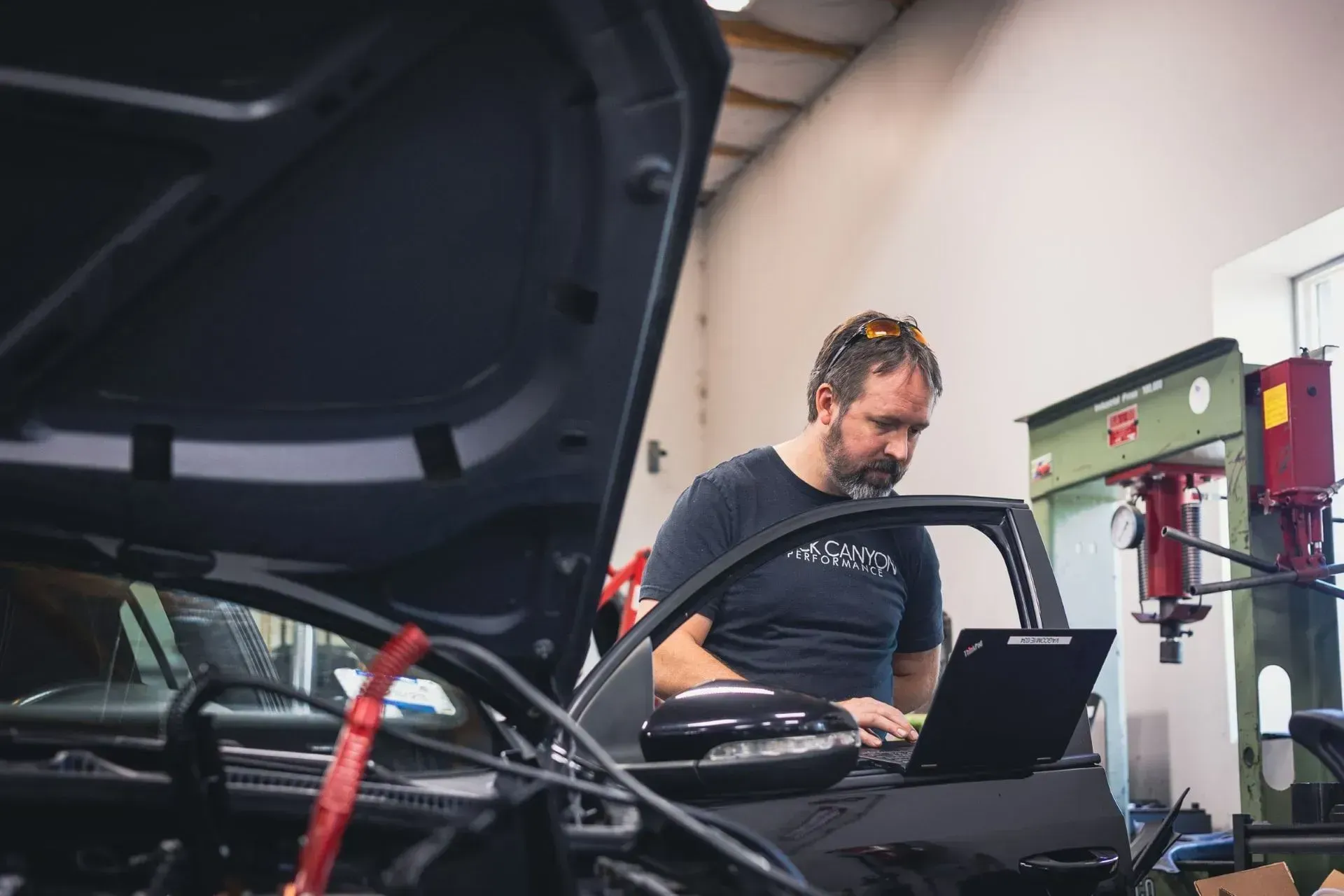
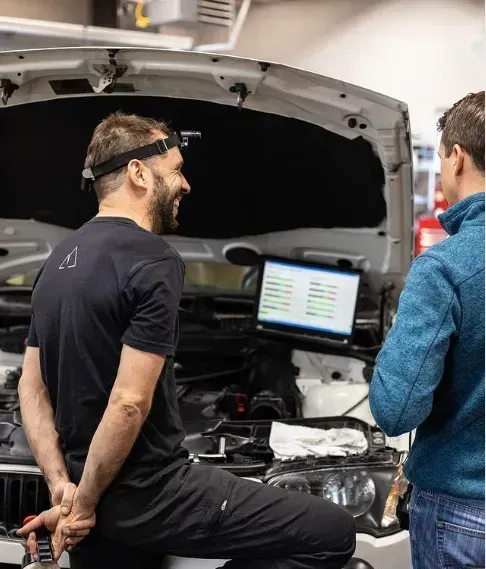
Before we begin any tuning work, we assess your car's mechanical condition thoroughly. We review live data logs, check how sensors are reading across operating conditions, and confirm that fuel delivery and boost control are within specification. A fault code scan alone is not sufficient. We look at how systems are actually performing.
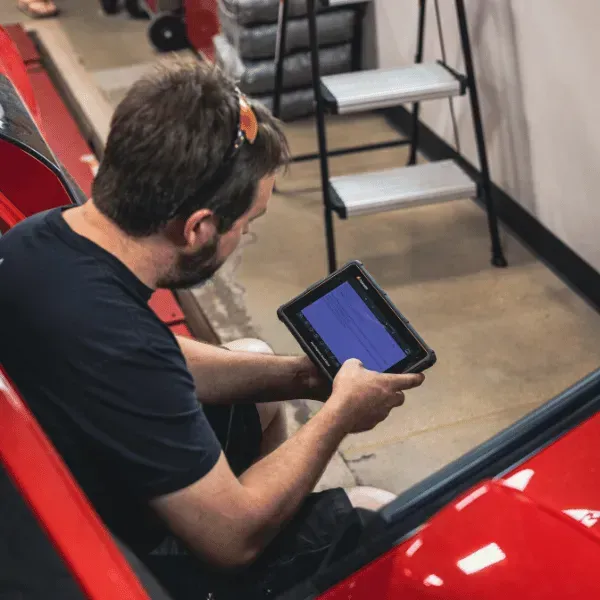
Our process uses factory-level tools built specifically for European platforms. Every session includes a Digital Vehicle Inspection (DVI); photos, technician notes, and a prioritized summary of findings, so you have a clear picture of your car's condition before any calibration decisions are made. See how our diagnostic services work.
| Approach | Result |
|---|---|
| Full diagnostic confirmation before calibrating | Stable, accurate, repeatable tune |
| Calibration applied without diagnostics | Risk of compounding undetected issues |
| Diagnostics complete, calibration deferred | Confirms whether tuning is appropriate now |
What a Pre-Tune Diagnostic Typically Uncovers
- Boost leaks in intercooler piping or charge system connections
- Sensor drift in MAF, MAP, or O2 sensors that corrupts fuel trim data
- Fuel delivery issues — injector wear, pump pressure drop, regulator inconsistency
- Ignition component wear affecting combustion stability
- Active or pending fault codes that must be resolved before calibration
Audi ECU Tuning: What Owners Should Expect
Audi's turbocharged lineup carries genuine calibration potential across its range. Audi performance tuning focuses on improving boost response, torque delivery, and overall drivability rather than chasing peak output numbers. The EA888 2.0T in the A4, A5, and Q5, and the 3.0T in the S4, S5, and SQ5, both respond well to refined calibration. The Quattro drivetrain adds another layer.. Calibration that accounts for the full drivetrain produces better results than one focused purely on engine output numbers.
A well-calibrated Audi feels more linear from lower RPM, builds boost more cleanly, and responds to throttle inputs with less hesitation.
Common Goals for Audi Owners
- Stronger mid-range torque from lower in the RPM band
- Reduced turbo lag on 2.0T and 3.0T applications
- More direct throttle response without twitchy behavior
- Better power consistency at Colorado's higher driving elevations
Hardware That Supports Audi Calibration
Some owners combine engine calibration with hardware from our performance upgrade services. These are separate services selected for your specific build:
- Intercooler upgrades: reduce charge air temperatures for more consistent boost
- Intake upgrades: increase airflow and reduce inlet restriction
- Downpipes and exhaust upgrades: lower backpressure and improve engine breathing
BMW ECU Tuning: Improving Performance Without Losing Balance
BMW built its reputation on driver feel. The B58 and N55 engines deliver smooth power, responsive mid-range behavior, and a linear quality through the rev range. Calibration should build on that.
The goal with a BMW tune is better response and stronger mid-range output, while keeping the balance that makes these cars enjoyable every day.
What Changes After BMW Calibration
- Throttle response is more immediate across the RPM range
- Mid-range torque becomes more accessible during everyday driving
- Acceleration feels smoother and more linear, power builds without hesitation
- Power delivery on mountain grades becomes more consistent
Why Calibration Quality Matters More Than Peak Numbers
A dyno figure tells one part of the story. Quality calibration prioritizes fuel trim stability, appropriate ignition timing, and boost targets that hold under sustained real-world load — not just during a single pull. We tune for how the car performs over time, on canyon roads and daily commutes alike.
What Shapes ECU Tuning Results in Colorado
Elevation, fuel grade, and vehicle condition are the three variables that most affect calibration quality for Colorado drivers.
| Variable | Effect on Calibration |
|---|---|
| Elevation (~5,350 ft in Arvada) | Air density is ~16% lower than sea level; boost targets must account for thinner air |
| Fuel grade (91 vs. 93 octane) | Timing advance and boost targets depend on available octane |
| Vehicle condition | Component wear limits what calibration can reliably deliver |

How Arvada's Elevation Affects Turbocharged Engines
At approximately 5,350 feet, the air your engine breathes is noticeably thinner than at sea level. A peer-reviewed study published in the Journal of Applied Fluid Mechanics (Motahari & Chitsaz, 2019) confirmed that while turbocharger systems partially compensate for altitude-related air density loss at lower RPMs, output at higher RPM ranges still drops as elevation increases without calibration matched to the actual operating environment.
A calibration set for Arvada's elevation adjusts boost targets for actual atmospheric pressure. A map written at sea level will not hold its targets here.
Why Your Car's Current Condition Matters
Worn spark plugs, degraded injectors, and deferred maintenance all introduce variables that calibration cannot compensate for. This is why a pre-tune inspection is the first step we take. It determines whether the car is ready and protects the quality of the results.
What to Look for in a German Car Specialist for ECU Tuning
Audi and BMW electronics are deeply integrated. An adjustment to one parameter can produce downstream effects on fuel trims, transmission behavior, and traction system response. Getting that right requires platform-specific knowledge and the right tools, not just tuning software.
Working with a German car specialist helps ensure calibration aligns with factory systems and real-world driving conditions. Our factory-trained, ASE-certified technicians work alongside trusted local and national tuning partners who focus on European platforms. Our staff is salary-based, focused on quality rather than job volume. Black Canyon Performance European Auto Service uses dealer-grade diagnostic tools, backs every tune with data logging, and confirms results through post-calibration testing. Our in-ground alignment rack is also available for suspension or handling work that supports a complete performance build.
What Separates a Qualified Shop
- Verified experience with Audi and BMW platforms, not general performance tuning
- Diagnostics are confirmed before calibration begins, every time
- Data logging used during and after the tune to verify targets are holding
- Factory-level tools capable of reading, writing to, and validating European ECU systems
When Tuning Is Not the Right Next Step
There are situations where calibration is not appropriate yet, and we will say so directly.
Hold off on tuning if any of these apply:
- Warning lights are active, or fault codes are unresolved
- Boost leaks, oil consumption, or injector issues are present
- Maintenance is overdue; oil service, air filter, spark plugs
- Prior repair work was poor and has not been corrected
In each case, the right starting point is a diagnostic inspection. Calibrating over unresolved problems does not fix them.
How to Prepare Your Audi or BMW Before the Appointment
A few steps before your visit directly improve calibration results.
Pre-Tuning Checklist
- Oil service: Correct-spec fresh oil protects the engine during calibration. We perform European oil changes for all platforms we service
- Air filter: Restriction reduces airflow and skews fuel trim data
- Spark plugs: Worn plugs create ignition inconsistency calibration cannot fix
- Fault code scan: No active or pending codes before calibration begins
- Fuel system check: Injector flow and pump pressure affect calibration accuracy
- Charge system inspection: Boost leaks in the intercooler piping prevent boost targets from holding
Common Questions About ECU Tuning
Is ECU tuning safe for daily driving?
Yes, when done on a properly prepared car using a methodical process. The tune operates within the engine's mechanical limits. Problems arise when shops skip diagnostics or push beyond what the platform can sustain.
Does tuning affect my warranty?
Warranty implications vary by manufacturer and model year. We recommend reviewing your specific terms and discussing your vehicle with us directly before proceeding.
Will a tune reduce long-term reliability?
A quality calibration on a well-maintained car does not reduce reliability. Issues come from tunes that push beyond safe limits or are applied to cars that were not ready.
What about emissions compliance?
All engine calibrations that may affect emissions are intended for closed-course competition vehicles or vehicles not operated on public roads. They may not meet applicable emissions regulations for street use.
ECU Tuning Backed by Diagnostics at Black Canyon Performance European Auto Service
ECU tuning changes how your car drives. For Audi and BMW owners in Arvada and across Colorado, spring is the season to act; stable conditions, the return of performance driving, and the end of winter's demands on your engine all align now.
Black Canyon Performance European Auto Service approaches every calibration project the same way: confirm the car is ready, calibrate with care, and validate the results. Our factory-trained, ASE-certified technicians bring platform-specific knowledge, dealer-grade tools, and an honest process to every project; no volume pressure, no shortcuts.
To schedule your pre-tune inspection or calibration consultation by a German car specialist in Arvada, CO, contact us at (303) 423-0588 or info@blackcanyonperformance.com. We are at 5785 W 56th Ave, Arvada, CO 80002.


Your European Vehicle Dealership Alternative
Highly rated European and Import vehicle care serving the Colorado Front Range. We specialize in BMW, Audi, MINI, Land Rover, Porsche, Volkswagen, Mercedes-Benz and other top European car brands.