Why Post 1998 Porsche Vehicles Require Specialized Diagnostic Tools
Black Canyon Performance European Auto Service focuses more on Porsche repair and maintenance of models post 1998. That is when Porsche's electronic architecture grew complex enough to need proprietary diagnostic software. A generic OBD-II scanner reads basic engine codes, but we carry the factory-level tools most general shops don't.
Key Takeaways:
- Federal OBD-II baseline: We work above the OBD-II floor that's been required nationwide since 1996, first established by the California Air Resources Board and accepted by the EPA as meeting the federal standard, since Porsche's own systems go well beyond it.
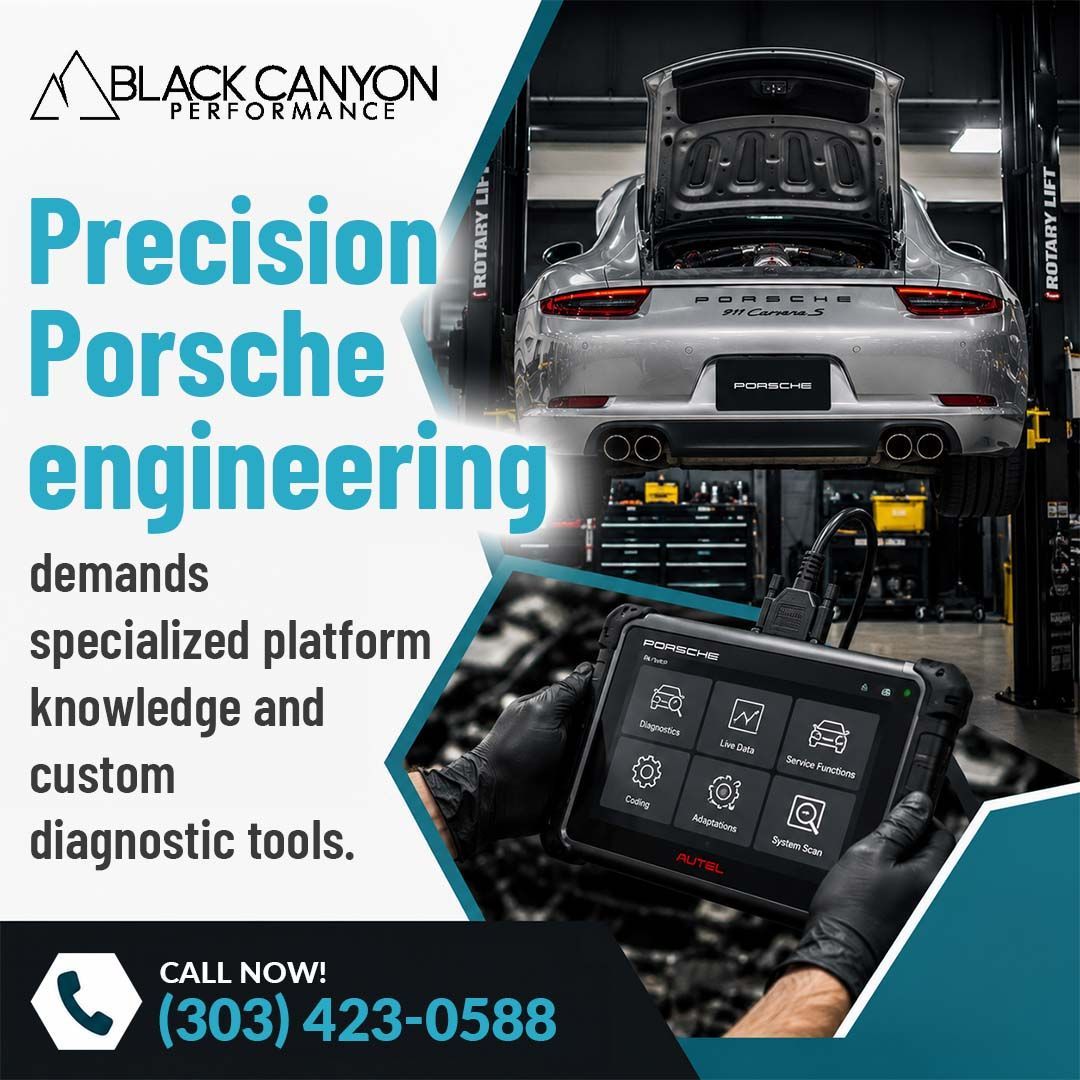
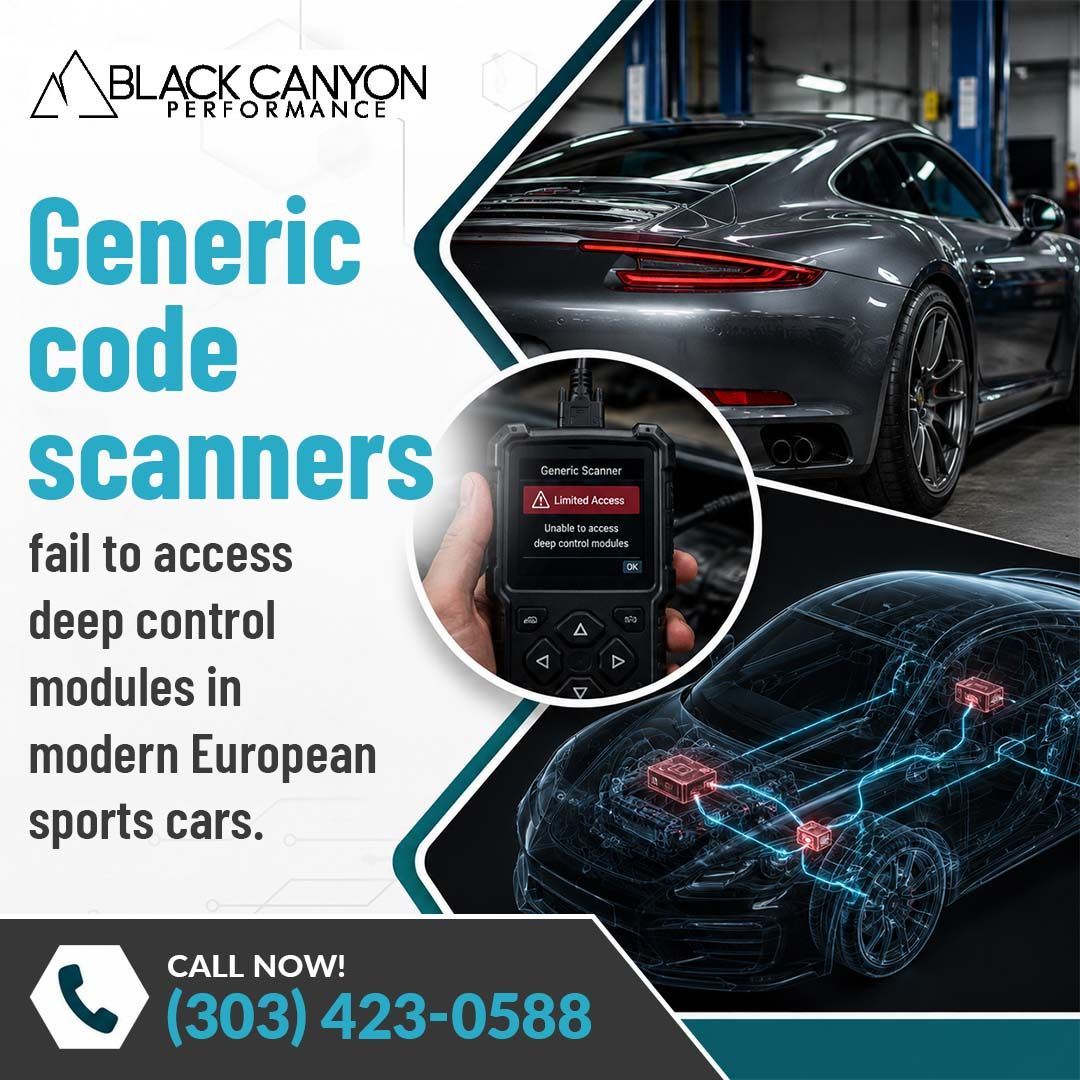
- Porsche-specific tooling: We rely on Porsche's proprietary diagnostic platform, which reaches dozens of vehicle modules, while a generic scanner typically reaches only the engine and transmission.
- Model-year alignment: Industry-standard Porsche diagnostic tools generally support 1998-and-newer models.
What Makes a 1998-and-Newer Porsche Different From a Basic OBD-II Reader?
We work more on 1998-and-newer Porsche models for a specific reason. That's when these cars started running dozens of electronic control modules for the engine, transmission, suspension, climate, and body systems, far beyond what a basic OBD-II reader was ever built to check.
Why Generic Scanners Fall Short
Every 1996-and-newer model-year gasoline passenger car and light-duty truck sold in the United States was required to be OBD-II compliant under federal requirements, with California adopting and enforcing aligned OBD-II rules for covered vehicles. That baseline gives us access to engine fault codes on any car we service, but it says nothing about the rest of a modern Porsche.
Porsche builds its own diagnostic platform because a generic scanner can't reach the transmission, suspension, climate control, or body modules that make a Porsche behave like a Porsche. When we code a replacement part, register a new battery, or reset an adaptation value at Black Canyon Performance European Auto Service, we need that manufacturer-level access, not a code reader from an auto parts store.
Generic Scanner vs. Porsche-Specific Diagnostic Tool
Here's how the two options compare side by side:
| Factor | Generic OBD-II Scanner | Porsche-Specific Diagnostic Tool |
|---|---|---|
| Module access | Usually limited to engine-emissions diagnostics and a small set of standard functions | Can communicate with many Porsche control units, depending on the tool and model. |
| Fault code detail | Displays standardized OBD-II trouble codes and basic descriptions | Provides Porsche-specific fault-code descriptions and deeper guided diagnostics. |
| Coding and configuration | Typically does not support coding, adaptations, or module programming | May support coding, adaptations, service resets, and other advanced functions |
| Model-year support | Built for OBD-II-compliant vehicles sold from 1996 onward in the U.S. and Canada | Coverage depends on the tool; many Porsche-oriented tools support later Porsche models and some older applications |
How Do You Know Your Shop Has the Right Tools for Your Porsche?
You can confirm real diagnostic capability by asking a few direct questions before you book a visit.
- Ask what the shop's scanner can actually reach. A tool that only pulls engine codes can't touch suspension, climate, or body modules on a 1998-and-newer Porsche.
- Ask to see a sample diagnostic report. Porsche-specific tools document findings module by module, not as a single generic code.
- Ask how the shop keeps its software current. Porsche issues module updates regularly, and outdated diagnostic software can miss what a current version would catch.
We built Black Canyon Performance European Auto Service around
Porsche vehicle specialist tooling for exactly this reason. A fault code is only useful if the technician reading it has the software to act on it.
Frequently Asked Questions
Do I need special tools just for an oil change on my Porsche?
No, we don't need Porsche-specific diagnostic software for routine fluid and filter service, though resetting the service reminder often calls for it.
Can a general mechanic still work on parts of my Porsche without Porsche-specific tools?
We can handle front brake pads or basic suspension work without proprietary software, but rear pads on electronic parking brake models and anything involving electronic modules or coding need it.
Why do some independent shops still use dealership-level diagnostic equipment?
We invest in Porsche-specific tools so we can match a dealership's coding, programming, and diagnostic depth, often with less wait time.

Ready for Diagnostics That Actually Reach Your Porsche?
If your Porsche needs more than a generic code reader can offer, we have specialized tools for
Porsche service and repair to find the real issue at our Arvada shop.
Contact Black Canyon Performance European Auto Service at
(303) 423-0588 or
info@blackcanyonperformance.com, and let's see what a proper diagnostic actually shows. Our expertise in diagnostics helps us to resolve problems and optimize your Porsche’s performance.


Your European Vehicle Dealership Alternative
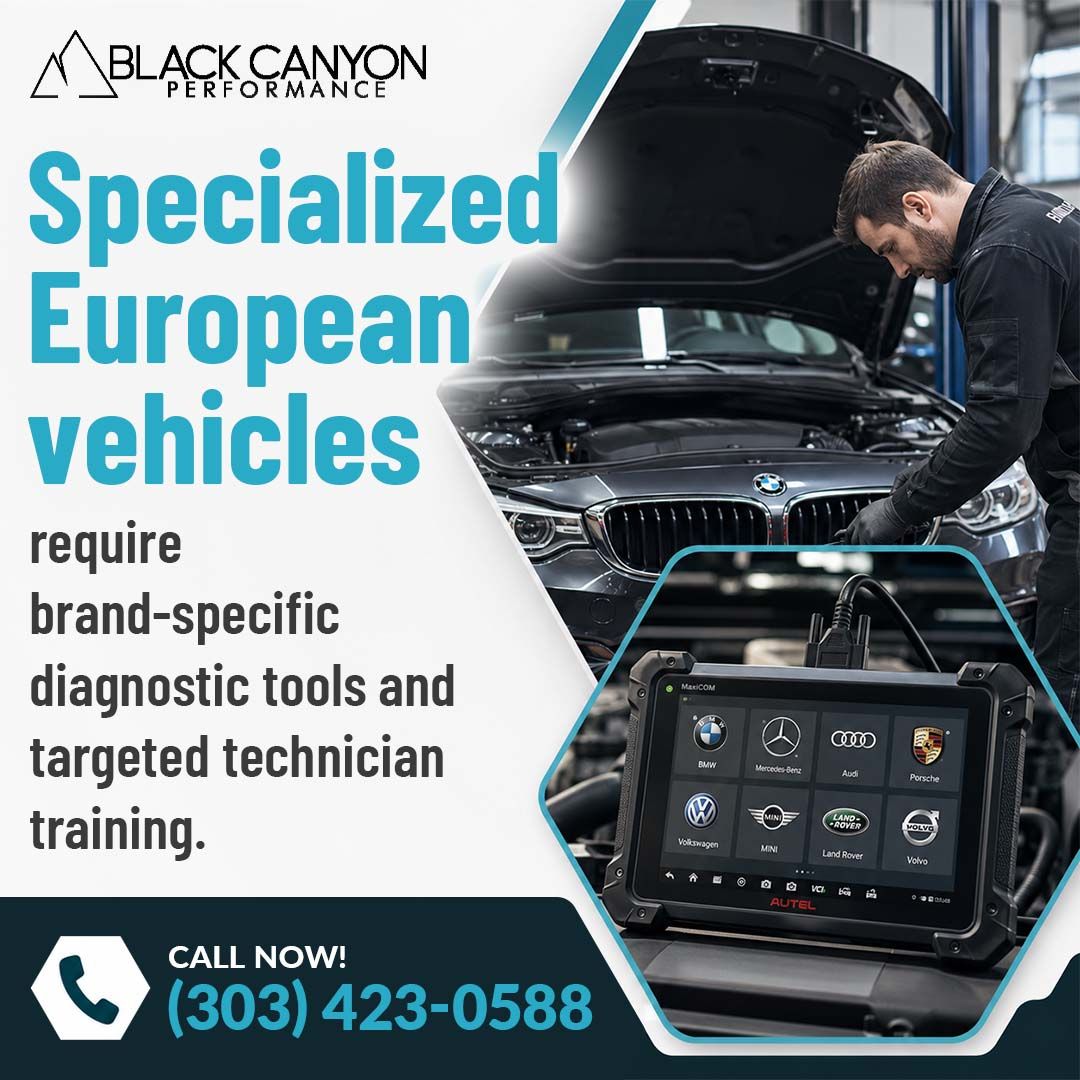
Highly rated European and Import vehicle care serving the Colorado Front Range. We specialize in BMW, Audi, MINI, Land Rover, Porsche, Volkswagen, Mercedes-Benz and other top European car brands.